
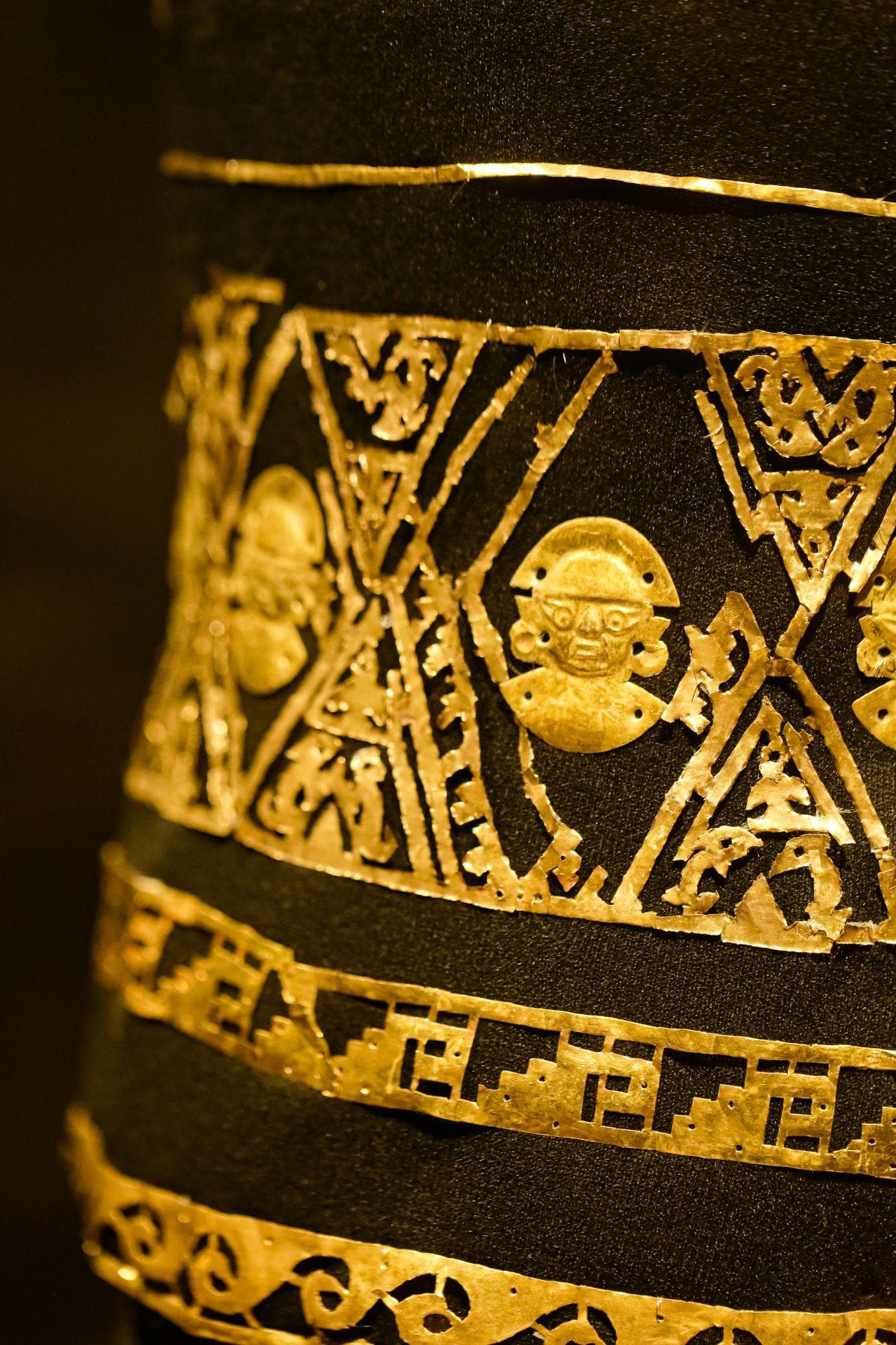
In Search of El Dorado
From the Muisca myth to the gold that built empires
The Spanish arrived seeking El Dorado and never found it. But the gold they did find financed an empire, built cities that still guard that history, and reconfigured a continent in ways that have yet to be fully reckoned with. This route traces the path of the sacred metal from Muisca cosmogony to the galleons that departed from Cartagena toward the Spanish Crown.
The misread ritual
For the Muisca, gold was not wealth. It was offering, a bridge between worlds, sacred material that belonged to the water and the gods, not to men. The ritual of the golden man — the chieftain who covered himself in gold dust and submerged into Laguna de Guatavita as an act of communion with the sacred — was misread by the conquistadors as evidence of a city built entirely in metal. That misreading moved armies, destroyed civilizations, and founded the cities we visit today.
El Dorado never existed the way the Spanish imagined it. But the obsession it generated does — written into every stone of every colonial city this route crosses.
Bogotá and Guatavita: where the legend was born
The journey begins in Bogotá, at the Museo del Oro, where guides specializing in pre-Columbian cultures explain the Muisca cosmogony and why that people cast the metal into water while Spain tore it from the mountains. Then Guatavita, the lagoon where the ritual that fed the European fever for two centuries took place. And a visit to a private colonial goldwork collection not open to the public, where the metal tells the two simultaneous stories it has always told: the one of dispossession, and the one of the mestizaje that forged Colombia.
The Magdalena River: the gold artery
The Magdalena River is the second chapter. For three centuries it was the artery connecting the Andes to the Caribbean, the road along which gold began its journey toward Spain. Navigating from Honda, the port where mules unloaded the metal from the mines, carries a historical density that no museum can replicate. A day trip to an active mine in Falan puts colonial extraction in perspective, with a mining engineer explaining the geology of Colombian gold and a historian narrating the systems of exploitation and indigenous resistance that textbooks tend to omit.
Mompox: the time capsule
Mompox is the third chapter, and the strangest. The river changed course and left it isolated, and that isolation preserved it as a colonial time capsule. Here, filigree goldwork has passed from master to apprentice since the seventeenth century, with techniques that survived four centuries uninterrupted. A workshop with Mompox's master goldsmiths is not a tourist demonstration but access to a tradition that very few have witnessed up close.
Cartagena: the port where the gold ended
Cartagena closes the route where the gold always ended. From this fortified port the loaded galleons departed for the Crown, and the walls that now seem decorative were for centuries the defense of the richest city in the New World. The Afro-Caribbean gastronomy born here tells another story of the same metal: that of the people brought by force to extract it, who built an extraordinary culture at the margins of that violence.
pre-Columbian goldwork · the gold of the myth
market hall · Honda
wood and iron bridge · on the route
See the full journey